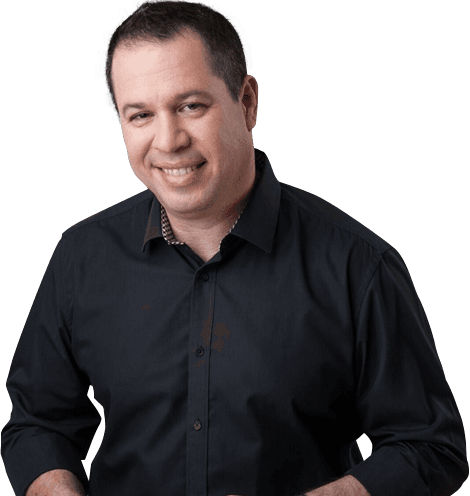
Dr. Lior Zoref
Crowd-wisdom researcher, bestselling author of Mindsharing, and CEO of the Yesh Matsav nonprofit
Dr. Lior Zoref explores the meeting point of collective intelligence and artificial intelligence. He holds a PhD in crowdsourcing from Bar-Ilan University, is the author of the bestselling book Mindsharing (translated into many languages), and has spoken at TED, The White House, Google, and the MIT Media Lab. He spent fourteen years at Microsoft, most recently as vice president of marketing, and is the founder of Yesh Matsav, a nonprofit helping youth at risk.
Wait, what is the singularity anyway?
The term was coined by the mathematician John von Neumann back in the 1950s, but the person who turned it into a household name is Ray Kurzweil, the inventor and futurist who serves as a director of engineering at Google. Kurzweil splits the road into two stations. By 2029, he predicts, we will reach AGI: artificial general intelligence, matching human ability in every field. And from there, in 2045, comes the full singularity, the point where machine intelligence surpasses human intelligence and changes life from the ground up. The idea itself is older. In 1965 the mathematician I. J. Good described an "intelligence explosion": once a machine can improve itself, every improvement breeds a faster one, until we lose the ability to predict what comes next. And the science fiction author Vernor Vinge, who gave the phenomenon its modern name in a 1993 essay, put it simply: it is the horizon beyond which our models of the world stop working. Researchers disagree about almost everything: the dates, the very possibility, what happens the day after. But one question is already entirely practical: in which fields do people trust a machine more than a human expert? That no longer needs guessing. It can be measured.
Why this experiment matters
People argue about when AI will surpass humans at conferences, on podcasts and over dinner. There is no shortage of arguments. There is a shortage of data. The Singularity Challenge replaces the argument with a simple measurement: each round, a human expert and an AI model answer the same question, without names, and the public picks the answer that seems smarter. The results are collected here, round after round, building one transparent index that shows where real people's preferences are moving. The singularity will not arrive in a single day. It approaches one question at a time. Here, you watch it happen.

The Challenge and Yesh Matsav
I had the privilege of founding and leading Yesh Matsav, a nonprofit working for youth at promise. Much of our work touches exactly the question this challenge measures: how to harness AI for people. For example, we built an AI-based simulator for practicing difficult conversations, helping the teachers who support youth at risk. The nonprofit operates with one goal: helping young people in crisis. If this challenge makes you think about the future, consider supporting those who are already living it.